
Sports Injury Treatment for Active Locals
Sport and physical activity are part of everyday life for many in Brisbane. Injuries can happen at any level, no matter if you are a competitive athlete, personal trainer, jogger or weekend warrior.
So for many that experience an injury during sport, the focus at Ortho ARC Brisbane is not just about treating the injury but looking at why it occurred and how to best support a return to activity. With a special interest in this area, Dr Blake Fidock, Orthopaedic Specialist, speaks about how sports injury treatment is about more than recovery.
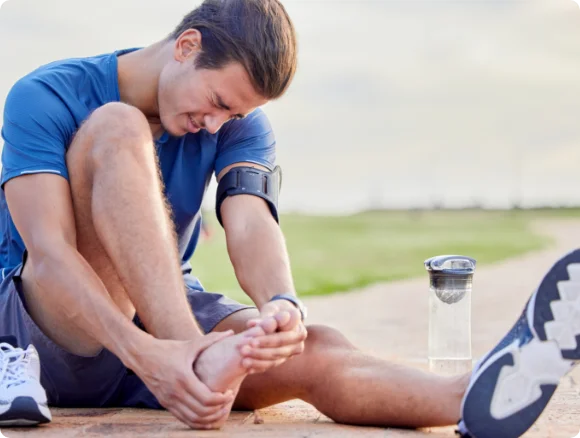
Common sports injuries seen in Brisbane
Sports injuries really depend on the activity, but several that are commonly seen include:
- Ligament injuries such as ACL tears and ankle sprains
- Muscle strains, especially in the hamstrings and calves
- Tendon conditions such as Achilles tendinopathy
- Cartilage injuries in the knee or shoulder
- Overuse injuries linked to training load or technique
Some injuries are sudden and others develop gradually. Either way, early specialist assessment can help reduce the risk of a more minor injury graduating to a worse injury or becoming a long-term problem.
Why early specialist review is important for sports injuries
Many people delay seeking care, hoping symptoms will just settle on their own. This may sometimes be the case for very minor injuries, but ongoing pain, instability or reduced performance should always be assessed.
An orthopaedic review at Ortho ARC includes:
- A detailed history of the injury and activity levels
- Physical examination of the affected joint or muscle
- Imaging where clinically indicated, such as MRI or X-ray
This process provides information to guide diagnosis and management in communication with your GP.
Sports Injury Treatment at Ortho ARC Brisbane
Dr Blake Fidock offers a staged and individualised approach to sports injury treatment in Brisbane and works in communication with your referring GP for your ongoing care.
Accurate diagnosis of your sports injury
Identifying the specific injury is the first important step in determining the treatment of your injury. This is because treatment plans can differ significantly between conditions that may sometimes feel similar, such as a muscle strain verses a ligament injury.
Non-surgical sports injury management
Many sports injuries can be managed without surgery. This might look like:
- Physiotherapy and guided rehabilitation
- Activity modification
- Strength and conditioning programs
- Pain management strategies where needed
The aim is to support movement and strength while healing progresses.
When surgery may be considered
Some injuries, such as certain ligament ruptures or complex joint injuries, may require surgery. This decision is based on:
- The type and severity of the injury
- Your activity goals
- Response to non-surgical care
Surgery is considered when non-surgical methods have not provided sufficient improvement, quality of life is being affected and where it is clinically indicated to improve stability, function or long-term joint health.
Injury rehabilitation and returning to sport
Rehabilitation remains an important part of recovery after injury and surgery.
A rehabilitation program focuses on:
- Restoring joint range of motion
- Rebuilding strength and muscle control
- Improving balance and coordination
- Gradual return to sport-specific movements
You have probably heard this before, and it’s for a good reason… Returning to sport too early increases the risk of reinjury. A guided return-to-play plan can support a gradual progression based on your recovery and improve long-termoutcomes.
Reducing your risk of future sports injuries
Not all injuries can be prevented, though there are strategies to help lessen the risk including:
- Strength and conditioning tailored to your sport
- Warm-up and recovery routines
- Load management, especially during periods of increased training
- Reviewing technique or biomechanical patterns
With a special interest in sports injury, Ortho ARC Brisbane can help identify and implement these strategies in a way that is personalised to you and your level of activity.
When should you see an Orthopaedic Specialist?
You may benefit from specialist assessment if you experience:
- Persistent pain that does not improve with rest
- Joint instability or the feeling of joints ‘giving way’
- Swelling that recurs or does not settle
- Difficulty returning to sport or training
- A significant injury during activity
Early specialist review can help clearly identify your injury and outline your options.
Sports injury care in Brisbane at Ortho ARC
Sports injury treatment in Brisbane is not just for elite athletes. Many of our patients are active individuals who want to be able to maintain their lifestyle, including sport, work and general fitness.
Dr Blake Fidock provides orthopaedic assessment and management that is personalised to your goals and your overall health. We want to help you return to activity and sports, with a plan that supports both your recovery and long-term joint health.
If you are dealing with a sports injury, speak with your GP about a referral to Ortho ARC.
References:
Australian Institute of Health and Welfare. (2023). Injury in Australia: Sports injuries. Australian Government. https://www.aihw.gov.au/reports/sports-injury/sports-injury-in-australia/contents/sports-participation-and-injury-rates
Sports Medicine Australia. (2022). Sports injury prevention and management. https://sma.org.au/resources-advice/injury-fact-sheets/
Australian Institute of Sport. (2021). Return to sport guidelines. https://www.ausport.gov.au/media-centre/news/ais-framework-helps-guide-a-safer-return-to-sport
Dr Blake Fidock (MED0001788650) MBBS (Hons. 1), MTrauma (Ortho), FRACS (Ortho), FAOrthA is a Specialist Orthopaedic Surgeon in Brisbane. This information is general in nature and is not a substitute for medical advice, diagnosis or treatment and does not establish a doctor-patient relationship. All surgery carries risk and individual results may vary. Please consult your GP regarding your individual circumstances and for referral if required.