
Hand and Wrist Surgery
Experience Relief. Regain Ability.
The hands and wrists are vital for almost every daily activity. An injury to this area, whether it is a fracture or a soft tissue problem, can be debilitating and significantly impact a person’s ability to work, socialise, and live independently.
Due to the complex anatomy of bones, tendons, nerves, and ligaments, these injuries require the expertise of a specialist. Dr Blake Fidock at Ortho ARC in Brisbane is an orthopaedic surgeon with experience in hand and wrist fractures and soft-tissue surgery, providing assessment, surgical management, and follow-up care.
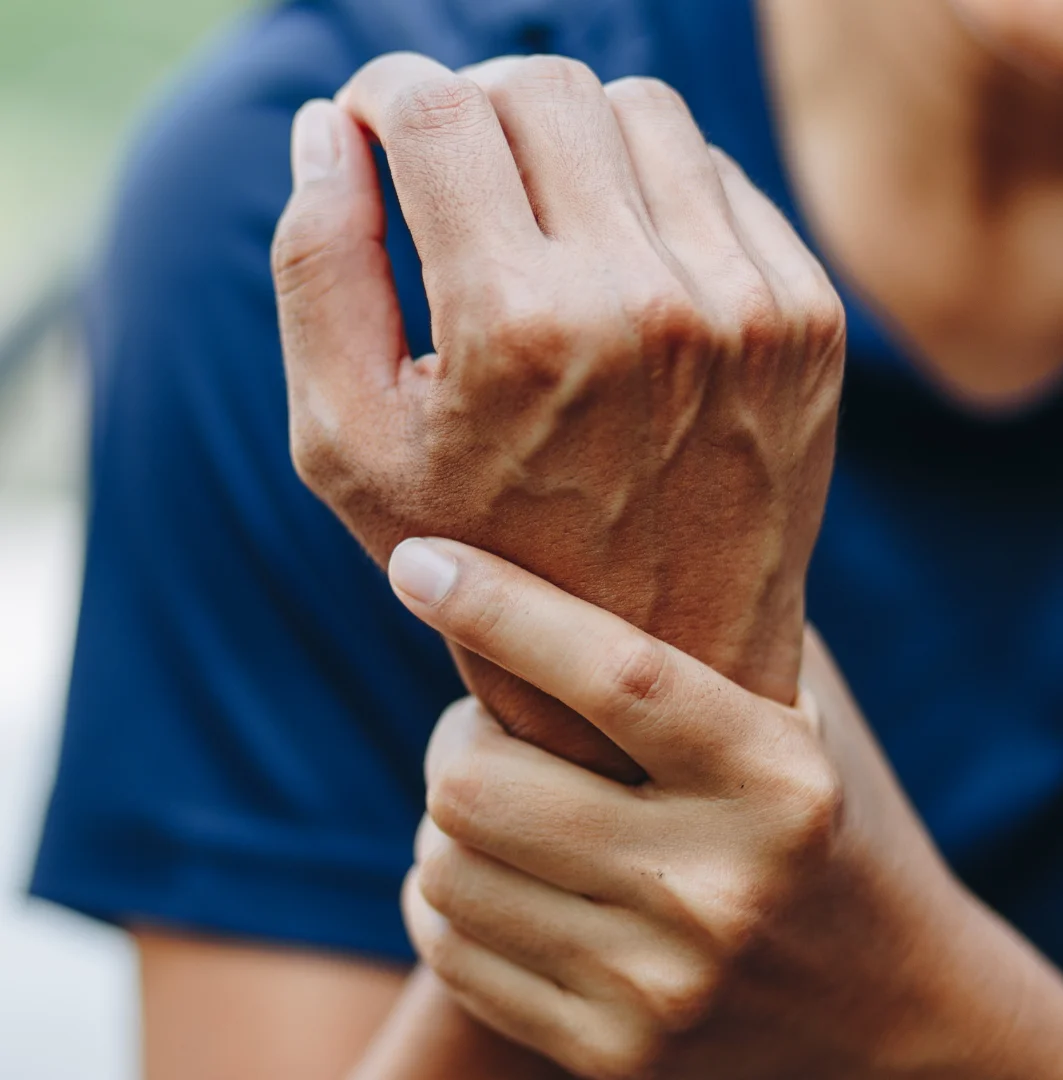
Common Hand and Wrist Injuries
Dr Fidock treats a wide range of hand and wrist injuries, from minor fractures to complex multi-tissue problems. Common conditions include:
- Fractures: Breaks in the small bones of the hand (metacarpals, phalanges) or the small carpal bones of the wrist.
- Tendon Injuries: Tears or cuts to the tendons that control finger and wrist movement.
- Ligament Injuries: Sprains or tears of the ligaments, which can lead to instability.
Patients often ask about the importance of seeing a specialist. The intricate nature of the hand means careful assessment and management are important for supporting healing and reducing the risk of long-term issues such as stiffness or reduced grip strength.

About Dr Blake Fidock
MBBS (Hons. 1), MTrauma (Ortho), FRACS (Ortho), FAOrthA
Orthopaedic Surgeon
Surgical Solutions: Fractures
The surgical procedure for a hand or wrist injury is tailored to the specific problem. Dr Fidock’s surgical plan is based on the type and severity of the injury.
- Fracture Fixation: For a displaced or unstable fracture, Dr Fidock may use plates, screws, or wires to restore the bone’s alignment and provide stability.
- Tendon Repair: For a torn or cut tendon, the surgeon will carefully stitch the ends of the tendon together.
- Ligament Reconstruction: For severe ligament tears, the surgeon may repair the ligament or use a graft to reconstruct it.
The goal of the surgery is to restore the anatomy and provide a stable environment for healing.
The Surgical Goals
The primary goals of hand and wrist surgery are to:
- Restore Anatomy: Confirm the bones, tendons, and ligaments are in their correct anatomical position.
- Achieve Stability: Provide a stable environment for the soft tissues and bones to heal.
- Promote Early Mobilisation: A stable fixation may enable earlier rehabilitation, supporting mobility and recovery.
Patients often raise concerns about the recovery process. While every patient’s journey is unique, a strong commitment to a rehabilitation program is essential for success.
Recovery and Rehabilitation
Recovery from hand and wrist surgery requires a strong commitment to the rehabilitation process.
- Initial Phase: A cast or splint is used to protect the hand and wrist during the initial healing period.
- Hand Therapy: A structured hand therapy program is essential to regain strength and a full range of motion. The therapist may guide the patient through gentle exercises to restore finger, hand, and wrist function.
- Return to Activity: Patients will be guided on when they can resume light activities and, eventually, sports or more strenuous work.
Patients often ask about the recovery timeline. While a return to light activities can take several weeks, recovery timelines vary and may extend over several months depending on individual circumstances.
Why Choose Dr Blake Fidock?
Hand and wrist surgery requires a high level of surgical skill and a deep understanding of the intricate anatomy. Dr Blake Fidock at Ortho ARC has experience in hand and wrist surgery and uses evidence-based surgical techniques in patient care. His patient-centred approach focuses on clear communication, appropriate treatment planning, and ongoing care.
If you have sustained a hand or wrist injury, request a consultation with Dr Blake Fidock at Ortho ARC to discuss assessment and treatment options.

Medical Disclaimer
This article is for general information and educational purposes only. It is not a substitute for professional medical advice, diagnosis, or treatment, and does not establish a doctor-patient relationship. All medical procedures carry risks, and outcomes vary between individuals. Always seek the advice of your GP, specialist, or another appropriately qualified health professional with any questions you may have regarding a medical condition or treatment. Where further or specialised care is required, your treating practitioner can provide an appropriate referral.
Contact us today
Take the first steps in your journey to
Experiencing Relief, and Regaining Your Mobility